

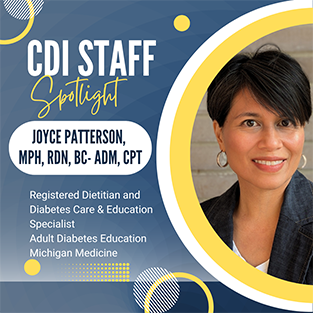
We recently had the pleasure of speaking with Joyce Patterson, a registered dietitian and diabetes care and education specialist at Michigan Medicine. In our conversation, she shared insights into her professional journey, her new book Think Like a Dietician: A Nutrition Counseling Starter Kit, and her practical strategies for healthier eating.
A Journey Shaped by Personal Experience
Patterson didn’t start her career in nutrition. After earning a degree in English, she began working in marketing and communications, honing her skills in writing and design. Her journey into dietetics started to unfold when her children developed severe food allergies that required emergency medical care. Managing their dietary needs sparked a deep interest in how nutrition impacts health and inspired her to shift paths.
Long before that turning point, another personal experience laid the groundwork for her passion, especially around diabetes care. At the age of 20, Patterson lost her father, who suffered from numerous diabetes complications, including vision loss and kidney failure requiring dialysis. Years later, while working as a dietetic intern, she had a revelation about the connection between electrolyte imbalances and heart function. This moment helped her understand what had happened to her father.
"Every day I remember my dad when I'm talking to people," Patterson shared. "Everything has been personal with nutrition, and honestly, everything comes back to nutrition. I don't care who you talk to or what you're talking about—you could be discussing sleep, physical activity, or school performance; at the end, everything is going to have some kind of nutrition-related factor."
Finding Her Focus: Diabetes Care
For the past decade, Patterson has specialized in diabetes care and education, guiding patients nutrition planning, behavior change, and technology-assisted disease management.
One of the toughest aspects of her role? Meeting patients where they are. "Sometimes the biggest challenge is talking about nutrition when that may not necessarily be the most important point of the day for that person," she explains. "There are times when we have to overlook certain food choices to really keep them safe, whether it's helping them adjust the settings on their insulin pump or make changes to how they take their medication."
Her approach is grounded in empowerment, not just education. “It’s a balancing act,” she noted, highlighting the importance of respecting each patient’s autonomy.
From Practice to Publication
Over time, Patterson noticed recurring challenges among her patients—especially around meal planning and nutrition beliefs. To address them, she began creating handouts and visuals, which eventually evolved into her book.
Published in 2024, Think Like a Dietician: A Nutrition Counseling Starter Kit is a practical resource for dietitians and other health professionals. It’s organized into four sections:
- The patient-provider interaction: Emphasizing patient-centered care and awareness of implicit bias
- Common eating patterns and habits among patients: Exploring what clinicians often see in practice
- Frequent referrals: Guidance on the most common referrals to dietitians (diabetes, heart disease, weight management, kidney disease, and digestive issues)
- Health communications: Including strategies for health literacy, cultural competence, and virtual care
While the primary audience is registered dietitians at any stage of their career, Patterson believes it would benefit all health professionals who discuss nutrition with patients—including doctors, nurses, and social workers.
The Plate Method: Simple, Flexible, Effective
When asked what single piece of advice she would give to healthcare providers discussing nutrition, Patterson quickly pointed to the plate method. This straightforward visual tool divides the plate into three parts: one-quarter carbohydrates, one-quarter protein, and half non-starchy vegetables.
"It's lower carb, which a lot of people gravitate toward, but it's not keto," she shared. "It gives people flexibility to still enjoy a variety of carbohydrates without feeling they have to give it all up. It is absolutely adequate in protein, and three-quarters of the plate would be vegetables and starch or fruit, so it's very plant-forward."
In support of this approach, Patterson launched PlateMethodPics.com, a royalty-free stock photography website specializing in plate method images. She developed the resource after struggling to find appropriate stock photos that weren't based on extreme diets.
Looking Ahead
Beyond her work as a dietitian and author, Patterson offers editorial services to help others craft effective health education materials. Her passion for both the creative and clinical sides of nutrition education is evident in all she does.
Lastly, Patterson offers this bit of practical advice for those of us struggling with the unhealthy habit of snacking before bed: "When reaching for a snack at night, ask yourself: Are you physically hungry? If so, look back at how you ate throughout the day. Was something missing? If you're not physically hungry, what else is going on? Are you bored? Stressed? Consider other options to address those needs."
Thank you for your time and advice, Joyce. We'll give it a try and report back!
Interested in learning more? Joyce Patterson’s book, Think Like a Dietician- A Nutrition Counseling Starter Kit, is available on Amazon, Barnes & Noble, and Routledge.com. To explore her plate method photography resource, visit PlateMethodPics.com.