

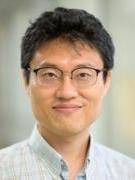
Jun Hee Lee
(He/him/his)
Biography
We study the relationship between stress, aging and metabolism. Environmental stresses are generally considered to accelerate aging and age-associated tissue dysfunction because they damage important cellular macromolecules such as DNA, protein and lipids. However, cells have several stress adaptation mechanisms that can reduce negative impacts on cell and organismal homeostasis. Interestingly, appropriate activation of such adaptive mechanisms could often lead to not only increased stress resistance but also general extension of health and lifespan. We hope that, in the future, we are able to utilize some of these protective mechanisms to generate therapeutics for age-associated degenerative disorders.
Research
(1) Stress-inducible Sestrins and their role in age- and obesity-associated metabolic pathologies, (2) Biochemical mechanisms underlying physiological functions of Sestrins, (3) Pathogenetic mechanisms of how autophagy is abrogated in human diseases including non-alcoholic fatty liver disease (NAFLD) and movement disorders, (4) Stress-induced protein inclusions and RNA granules, (5) Single cell-level understanding of stress-induced transcriptome changes, and (6) Technology development for single-cell and subcellular studies of spatial transcriptome and proteome.
