

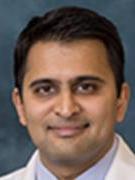
Abhijit Naik
Biography
Abhijit (Jeet) spent his formative years in the vibrant city of Mumbai, India, where he completed his medical degree at Grant Medical College. Driven by his interest in human health and quantitative analysis, he pursued further graduate training at the University of Alabama in Birmingham to become an epidemiologist and data scientist. He is a board-certified specialist in Nephrology by the American Board of Internal Medicine, with additional subspecialty training in Kidney Transplantation.
He completed his Nephrology and Kidney Transplantation training at the University of Chicago, under the mentorship of Michelle Josephson in kidney transplantation and Richard J. Quigg in glomerular diseases.
Beginning his career as a clinical faculty member at the University of Michigan, he was inspired by Roger Wiggins' foundational work on podocyte depletion and its role in FSGS. This inspiration led him to investigate the role of podocyte depletion in limiting long-term allograft survival in rejecting and non-rejecting kidney allografts. His work earned him a Career Development Award (K23) from the National Institutes of Health to train as a Physician Scientist in Systems Biology.
- MD Degree, Grant Medical College
- MPH, Epidemiology, University of Alabama Birmingham
Research
Currently, his research focuses on understanding the role of kidney growth in driving kidney and glomerular disease progression in conditions such as obesity and diabetes, which are characterized by kidney growth early in the disease process. Insights from these studies are pivotal for understanding the role of kidney allograft growth—a common occurrence after kidney transplantation—and its impact on reducing long-term allograft survival.
His ultimate goal is to apply a systems biology approach to kidney transplantation, integrating morphometric data from biopsies, functional data from electronic medical records, and genotype-level data from kidney donors and recipients. Hypotheses generated from these approaches are tested through prospective biosample and biofluid acquisition, built around Michigan’s surveillance and indication biopsy program. The biosample and biofluid collection is aligned with the Kidney Precision Medicine Project to facilitate synergy with such large networks. He currently leads the Michigan Kidney Transplant Biorepository and the ImPREC study, a multi-organ transplant biorepository funded through intramural grants from the University of Michigan’s Alfred Taubman Medical Research Institute.
