

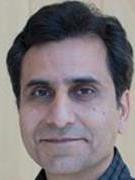
Kayvan Najarian
Biography
Dr. Kayvan Najarian is a Professor in the Gilbert S. Omenn Department of Computational Medicine and Bioinformatics (DCMB) as well as the departments of Emergency Medicine and Electrical Engineering and Computer Science at the University of Michigan. He is the Director of the Biomedical and Clinical Informatics Laboratory (BCIL), an Associate Director for the Weil Institute for Critical Care Research and Innovation, and an Associate Director for the Michigan Institute for Data and AI in Society (MIDAS), serving as the point person for data science collaboration in Biological Sciences and Health Sciences. Dr. Najarian is also the director of a national NSF Industry-University Cooperative Research Center (IUCRC) for Data-Driven Drug Development and Treatment Assessment (DATA) which aims to facilitate industry-wide collaborations on artificial intelligence (AI) methodologies for drug development.
Dr. Najarian received his Ph.D. in Electrical and Computer Engineering from University of British Columbia, Canada, M.Sc in Biomedical Engineering from Amirkabir University, Iran, and B.Sc. in Electrical Engineering from Sharif University, Iran.
Dr. Najarian’s research has been continually funded by agencies such as the National Science Foundation, the National Institutes of Health, the Department of Defense, and private companies. Overall, his research has resulted in more than 350 peer reviewed publications and over 40 patents in this field, some of which have been commercialized through industry partners including start-ups and large corporations. He has also written two textbooks in biomedical informatics that are being used at many universities and research institutes.
Research
Dr. Najarian's reserach focuses on the design of computational systems using advanced signal/image processing and artificial intelligence for clinical applications, including computer-aided decision support systems and drug design, with the goal of improving patient care and reducing the cost of healthcare. In particular, he focuses on creating decision support systems to manage traumatic brain injuries, respiratory illnesses, cardiac arrest, gastrointestinal diseases, and other critical care states.
